Showing posts with label M.A.. Show all posts

Wednesday, January 19, 2011

Review- Wildthorn by Jane Eagland


Wildthorn
by Jane Eagland
Young Adult/Historical (Victorian)/Gothic/Lesbian Romance
Novel (352 pages)

By Guest Reviewer M.A.

Buy it Amazon
 
They strip her naked, of everything—undo her whalebone corset, hook by hook. Locked away in Wildthorn Hall—a madhouse—they take her identity. She is now called Lucy Childs. She has no one; she has nothing. But, she is still seventeen—still Louisa Cosgrove, isn't she? Who has done this unthinkable deed? Louisa must free herself, in more ways than one, and muster up the courage to be her true self, all the while solving her own twisted mystery and falling into an unconventional love . . .

Originally published in the UK, this well-paced, provocative romance pushes on boundaries—both literal and figurative—and, do beware: it will bind you, too.


I found Wildthorn's premise and cover art intriguing. The novel itself left me with very mixed impressions. The author built an interesting, informative storyline around a powerful, admirable heroine. Setting and atmosphere portrayed in beautiful language captivated me until I couldn't put the book down. This novel boasts all the earmarks of excellent gothic romance and throws in a pinch of social commentary. Eagland's descriptive writing is well above average, compelling and lyrical.

The plot unfolds via Louisa's struggles to survive the indignities of her seemingly fraudulent commitment to a lunatic asylum alternating with flashbacks portraying past events leading up to her institutionalization. Use of flashbacks often risks distracting a reader or losing his interest, but Wildthorn is a novel where this method works very well and packs quite an impact. Chapters separate flashbacks from the main narrative, so it’s hard to get “lost.” 

The author provides insights and hints as to why Louisa might have been diagnosed as mentally ill and who might have diagnosed her and committed her. Readers familiar with the Victorian era should have a better sense of the causes leading to Louisa's situation, but the dehumanization, loss of privacy, and other abuses Louisa faces or witnesses at Wildthorn are no less horrible for the knowledge. These points are meticulously well-researched, as are other aspects of Victorian culture. Period and setting are alive and well in Wildthorn.

Although I enjoyed this book in most respects and considered it well worth my time, I felt characterization and plotting suffered, particularly during the book's falling action and ending. I realize Louisa is supposed to be a "modern woman ahead of her time," but I found some of her attitudes and characterization improbable. It struck me as unlikely Louisa (daughter of a comfortable, middle-class Victorian family) would lack basic understanding of etiquette, the importance related to family social connections and "good breeding," and so on. Louisa is an intelligent, sensible female, and most highly intelligent people learn how to conform sufficiently to function in society. We are frequently shown how intelligent Louisa, an aspiring medical student, is, but at other times she sounds like a complete social moron. I believe Eagland intended to make Louisa more relatable to present-day readers, but it cost authenticity. Louisa doesn't sound like a genuine Victorian girl/woman. Even Victorian women pushing for suffrage and other social reform adhered to some degree to the social and cultural standards of their time. Instead, Louisa sounded like a 21st century girl trapped in the past, constantly bewildered and horrified by limitations placed upon her due to her gender.

I have mixed feelings about the romance subplot revealing Louisa's same-sex preferences. On one hand, I applaud Eagland for introducing interesting and very human lesbian characters. At the same time, Louisa's lesbianism struck me as a tad gratuitous and not relevant to the plot. The romance itself wasn't all that pertinent to the story and, for me, at least, Eliza's romantic attraction to Louisa cheapened her willingness to believe Louisa's story and aid in her escape. I also doubted Louisa's sincere feelings for Eliza; Louisa's situation as an inmate at Wildthorn was so horrible, it seemed to me she'd love anyone who showed her any kindness or compassion. Eagland did her best to portray realistic affection and attraction growing between Louisa and Eliza, but I just couldn't buy it given the circumstances.

The tight storytelling fell apart near the end when the mysteries behind Louisa's ordeal are revealed and the subsequent aftermath. Eagland seemed to go out of her way to absolve everyone involved of real blame. The responsible parties are all either stupid, jealous, misinformed, impaired by substance abuse, or a combination of the above. I liked that Louisa found forgiveness and prepared to go on with her life on her own terms, but I would have felt better about it if the principles in the conspiracy experienced real consequences directly related to their actions.

As for the final chapter and "happy for now" resolution to Louisa and Eliza's romance, I found it believable, but also sort of sad. Throughout the entire story, we witness Louisa's steadfast refusal to conform to society's limitations standing in the way of her dreams to study medicine, but she conforms to social expectation and conceals her love affair under a mistress/servant relationship. Again, it just sort of "pulled me out of the book." Louisa did exactly what many Victorian men (and, I suppose women) did when attracted to people "beneath them" socially.

I liked this book in terms of its overall style and its subject matter. The conclusion’s not perfect, but I enjoyed the journey and will read it again.

Heat Level:  0 – 1 (1 very brief, non-explicit love scene)

Grade: B+ (excellent writing quality, historically accurate, execution suffers a tad toward the end)

Sunday, October 3, 2010

Review- Through My Window by Jayne Rylon

Through My Window
by Jane Rylon
Sept. 30, 2010
Contemporary/Erotica/m/f, f/f/m
Quickie (under 15k words)
Ebook- Ellora’s Cave Exotika (Erotic Fiction)

Buy it EC

By Guest Reviewer- M.A.

“Through my window, a sea of strangers swirl and retreat like waves in an ocean of humanity. I brush my hair, fix my makeup and flip on the glaring red light in my booth before turning to face my audience on the other side of the glass.”

For Star, this is another night on the job, though no two are ever alike. Adaptable and perceptive, she becomes many things in the course of one evening—whore, lover, nurse, psychologist and friend. But above all, she’s still a woman. Join her, through her window.

Through My Window isn’t a story that would normally tempt me into the purchase/read. Rylon’s style and “voice” in the story’s excerpt won me over and I’m so glad I gave it a chance. This author’s writing is superlative and convincing with exquisite, well-timed pacing.

A sultry, platinum blonde prostitute entices readers into her world, a night shift in Amsterdam’s red-light district. In the course of the evening we witness interludes with several of her clients. Jonah, a young U.S. tourist, seeks the fantasy and comfort of pleasure with a woman without pressure to perform. Rick, a local bouncer and one of her regular customers, visits Star for a rough quickie during his break. Her final clients in the early A.M, a devoted married couple, seek an anonymous “playmate” for a very special experience.

Star entertains one and all with the skill and energy typical of a true “service-oriented” personality. Rylon imbued her protagonist with remarkable depth and complexity. An unapologetic hedonist, Star clearly views her work as valuable and productive. I’ve found that many prostitute heroines fall into particular stereotypes, the nice girl forced by circumstances into the job, the love-starved woman with various emotional problems, the rebel defying society’s expectations, the hooker with the heart of gold, etc.. Rylon deftly avoids the pitfalls of stereotype and social commentary. Star comes through as a magnetic, empowered woman willing to admit she enjoys her job:

"Customers can sense I’m different than most. They recognize I’m here not because I have to be but because I want to be ... Every thrilling encounter is unique. Each partner creates a new experience as their quirks mix with mine. I can’t wait to see what tonight will bring. To adore what you do and be able to make others happy in the process—while earning fists full of cash. What more could a woman ask of a career?"

Despite her adventurous streak, however, Star maintains appropriate professional detachment from her guests, deftly avoiding particular types of intimacy and lovemaking. It’s apparent she seeks sensation and profit, not romantic involvement, but she does care about doing right by her customers.

Above all, this is an erotic fantasy about a night in the life of a successful prostitute. Neither Star nor Rylon allow sensuous storytelling to minimize the coarser realities of the business. Rylon relies heavily upon setting to this effect and strikes an impressive balance. I never forgot Star was a prostitute, but somehow her actions never came across as sordid or degrading, nor did I feel sorry for her. Star flies above the crasser details of the skin trade and invites the reader to look beyond them into that world’s beauty.


The real treat in Through My Window is Star’s final encounter with a middle-aged married couple. It was a surprise, for one thing – the book’s excerpt and teaser don’t mention any f/f/m interaction. Best of all, though, was the author’s handling of Star’s willingness to participate in sex with another female:

“Do you enjoy being with other women?” The gentleman makes a polite inquiry. Nothing crude here.

“I do service them, yes.” I nod.

“But do you enjoy it?” He stands firm on his inquiry.

“Yes, depending on the woman.”

No overdone angst or explanation accompanies Star’s bisexuality. It simply is what it is, she chooses to accept the couple’s patronage, and it results in an exquisite threesome. For multiple reasons, the ménage is both the most emotionally intimate and the most emotionally distant encounter of Star’s narrative.

Prostitutes and prostitution are frequently romanticized in fiction to the point artistic illusion can’t compete with reality. In Through My Window, I almost believe Star and her clients could be real people. None of these characters are perfect. Not all of them are young/youthful, gorgeous, with perfect bodies and fantastic libido. Even Star’s sex-kitten glamour wanes through her shift; her high heels start to tire her out. Nor are primary motives swept under the rug. Star sells sexual services and companionship; her customers clearly employ her to that purpose for sexual relief, to satisfy fantasies, or to enjoy stress-free, anonymous, no-strings-attached sex.

Editorial and technical quality are good. I tend to grade short stories more harshly than lengthier works on these points because a short story isn’t as hard to edit and polish and track continuity issues as a novel length work. No glaring errors pulled me out of the story’s spell.

I haven’t commented much on the story’s erotic content. The story’s overall tone is so erotic, the actual sex in the book flows seamlessly through the plot without competing with narrative, something all great erotica does. The erotic scenes themselves are well-written and unique, varied to suit the moods and preferences of Star’s different customers.

Through My Window is a definite keeper. It reads a little like how an accomplished prostitute should perform (I think.) It’s a well-written fantasy, both revealing and mysterious, pure escapist entertainment for a reasonable price.

Heat Level: 5 - explicit sexuality described in graphic language.

Grade: A- great story structure, compelling voice!

Tuesday, April 27, 2010

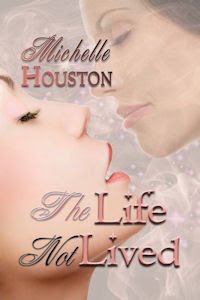
Review-The Life Not Lived by Michelle Houston

The Life Not Lived
by Michelle Houston
February 2010
Erotic romance, lesbian romance, paranormal/horror romance
Short Story (27 pages) 7K words
Ebook- Phaze Publishing

Guest Review by M.A.

Buy it Phaze, ARe, Fictionwise


We all have those moments in our lives we wish we could take back. Natasha has come to regret the choices she has made in her life, the biggest one being turning away from the one woman she had ever loved. But thanks to a late night visit from a succubus and a magical diary that found its way into her life, she can have a second chance. If she¬s willing to take a leap of faith...

I’ve read The Life Not Lived a few times and mulled over how to grade it. This short story qualifies as an “almost-book,” imperfect in places, but still likeable enough I want to recommend it.

Houston’s lyrical “voice” is a pleasure to read. Its cadence best compares to rainfall or the waft of soft piano music from a distant room. Her storytelling resonates with beautiful, subtle imagery. I often visualized specific scenes as though they’d been shot with soft-focus effects. Dream-like, no harsh edges.

Like many good short works, The Life Not Lived relies upon scene/setting, atmosphere, and emotion to build itself. Houston’s talent shines in her ability to craft a tale where 95% of the action occurs in a single location – the protagonist’s home – without ever inducing claustrophobic tension. Sufficient description illustrates Natasha’s world without overwhelming the plot.

Natasha is a convincing, well-drawn protagonist with whom many readers can identify. Recently divorced and approaching middle life, the successful professor/scientist contemplates past mistakes as she refurnishes her home. Years ago she broke off a romance with her college roommate, Lydia, in favor of marriage to Andrew because she viewed heterosexual marriage as a social and professional advantage. The selection of career over love haunts Natasha, and her recent acquisition of an old diary boasting paranormal properties may offer her a second chance for true happiness … if Natasha pays an unspecified price.

Self-doubt and fear of the unknown cook conflict through the storyline. A demonic visitor’s revelation of Lydia’s awful fate raises the stakes as Natasha reconsiders the toughest choice she ever made. As a horror fan, I enjoyed the subtle terror these elements added to the narrative. Great payoff followed great tension, but Houston remained true to the romance genre and provided readers with a happy ending. In a manner of speaking.

The Life Not Lived is marketed as erotic romance. It contains brief explicit content, including masturbation and f/f(demon) erotica. I viewed the erotica as neutral and a little gratuitous, not integral to the plot. It disappointed me that none of the erotica portrayed Natasha and Lydia together. Technically the “demon lover” contains an aspect of Lydia, but it was concealed to the point Natasha did not recognize her. In my opinion, an erotic romance featuring a character willing to seriously consider altering fate for a lost true love should contain the couple’s lovemaking.

The beautiful, flowing qualities of Houston’s storytelling do hit some awkward “bumps” at times. The plot lacked consistency concerning Natasha’s relationships with Lydia and with Andrew. At the beginning, Natasha describes Andrew as her college sweetheart, colleague, and friend turned faithless spouse. Later on, the narrative hints that Andrew’s extramarital affairs were condoned by Natasha, their own union platonic, and their divorce amicable.

The story also implied that Natasha’s interest in Lydia was more superficial while Lydia was truly in love with Natasha during their heyday, even though Natasha has never moved past her feelings for Lydia. It read like, from chapter to chapter, the author couldn’t decide who Natasha truly loved and who Natasha used. I normally enjoy the complexities related to sexually fluid characters. I think the author wanted to convey Natasha loved Andrew and Lydia, but this wasn’t addressed in a way I found credible.

Editorial problems included awkward word/phrase use and repetition. I’ve decided to only “count” technical issues if they are glaring and frequent enough to actively interfere with my reading enjoyment. Given this story’s size (approximately 7,000 words,) I felt too much error/awkwardness made it to the final copy. I’m unhappy saying that; Houston’s talent shines in this story, and a conscientious “polish” would have made all the difference.

An issue that might irk some readers is the low percentage of dialogue involved in the story’s word count. This worked, in my opinion; it increased the aura of isolation contributing to the story’s horror element. Since trends in popular fiction indicate preference for lots of dialogue, the silence might be an issue to some.

This story appealed to me. It has that “something” capable of engaging me through the read. I’m not blind to its faults, but the beautiful tone and voice combined with emotional subtlety and good horror elements outweigh its flaws.

I recommend The Life Not Lived to readers seeking a pleasant, entertaining quick adult fairy tale, keeping in mind fairy tales contain creepy moments.

Heat level: Erotic

Grade: C +

Monday, February 22, 2010

Review- Duchess: A Novel of Sarah Churchill by Susan Holloway Scott

Duchess: A Novel of Sarah Churchill
by Susan Holloway Scott
Aug 1, 2006
Historical Fiction/Romance (M/F, F/F)
Novel- 384 pgs. (over 60K words)

by Guest Reviewer M. A.

Buy it Amazon, B&N, Penguin

London:1673. With her family ruined by war, penniless thirteen-year-old Sarah Jennings is overjoyed to be chosen as a maid of honor at the bawdy Restoration court of Charles II. She soon wins the trust of Lady Anne of York, a lonely princess who becomes one of her staunchest allies. And though Sarah’s beauty stirs the desires of jaded aristocrats, she wants a grander future for herself than that of a pampered mistress. Only one man possesses ambition and passions that match her own: John Churchill, a dashing young military hero. He would ask for her hand—and win her heart for a lifetime….

But Whitehall Palace is ripe with ever-shifting alliances and sexual scandal, and Sarah will need all her cleverness to succeed. Titles, power, and wealth are the prizes, while an idle whisper in the wrong ear can bring a cry of treason, and the executioner’s ax. Will Sarah’s loyalties––and her dreams––falter when a king is toppled from his throne and a new queen crowned? And will she dare risk everything when her one true love is tested by a passionate, dangerous obsession?

Brimming with the intrigue and sensuality of one of history’s most decadent courts, Duchess brings to vivid life the story of an unforgettable woman who determines her own destiny––outspoken, outrageous, but most of all true to herself.


Wow. What a great read.

The Stuart Dynasty represents an intriguing study to anyone pondering the possibilities of sexual orientation being more a result of genetics/heredity than environment. Numerous Stuart royals were known to support same gender favorites, and it’s debatable they “learned” these preferences from their parents since their parents did not raise them. Housefuls of servants raised them instead. The tendency was noted and re-noted throughout generations of the family.

Sarah Churchill, a gentry commoner who survived the court intrigues of the Glorious Revolution and retired Duchess of Marlborough, enjoys a notorious reputation as a woman ahead of her time. Ambitious, politically astute, a great beauty according to the times, she was also the intimate friend – some say the mistress – of Anne Stuart, the last Stuart monarch to rule Great Britain.

This book has so much going for it. Excellent editorial quality and first-rate writing. Despite the novel’s length, Sarah’s story flies off the pages. Scott’s style combines detail, fascinating subject matter, and sufficient variety of structure to keep readers entranced. Even if you’re already familiar with Sarah’s story this novel’s worth reading.

I felt like Scott presented Sarah’s characterization honestly. Sarah is a flawed character and very much a product of her day even as she struggles to “break the mold” concerning her own expectations and reach beyond possibility. That said, I’m unsurprised that I disliked Sarah at times. Sarah was known to be manipulative, avaricious, an opportunist and a bully. Since she lived in an era where nice girls often finished last, I understand her bitchiness and self-centeredness. Sarah’s “voice” in this story is very genuine, revealing an ambitious woman who knows all the cards are stacked against her and behaves accordingly. When she recognizes potential benefit to herself in doing her duty or going beyond her duty, she acts without hesitation, even at exceptional personal risk. Unfortunately, because she is equally capable of deceit and betrayal to promote her interests, her heroism is less admirable. It’s understandable -- her principles and her actions demonstrate hypocrisy and self-interest typical of the times – but not likeable.

Sarah’s “fatal flaw” is her inability to admit her own shortcomings. She is capable of justifying or denying pretty much anything to rationalize her behavior. Again, this isn’t a likable trait, but it’s consistent with what’s known of Sarah. I found my feelings about Sarah comparable to the typical “self-starter power coworker/boss.” The kind of person who understands “office politics” and manipulates that knowledge for personal advantage. Before you know it, this kind of person’s playing golf with the CEOs even if their work ethics and productivity don’t measure up while other employees take up the slack.

The novel revolves around the two serious relationships of Sarah’s life, her friendship with Anne and her marriage to the dashing war hero, John Churchill.

Anne and Sarah meet as young girls in the York household. Sarah, a few years older, enchants Anne (a lonely, unhealthy child) with her brutal honesty. Anne recognizes Sarah doesn’t resort to white lies and sycophantic flattery typical of courtiers wishing to suck up to the Royals. Since Anne trusts Sarah, the normally stand-offish princess welcomes Sarah into her intimate circle.

Sarah, recognizing potential value in intimacy with Anne (third in line for the crown) does not hesitate to cultivate the friendship. Before long, the two are spying on courtiers’ indiscretions and enjoying regular card games. In between, Sarah fends off sexual harassment from various big players in the palace, including the Duke of York (the future James II) and the Duke of Monmouth (King Charles’ ill-fated illegitimate son, doomed to suffer brutal execution after Culloden.)

It was difficult for me to evaluate whether or not Sarah sincerely loved Anne in any capacity. The entire story is told in Sarah’s POV and so much of Sarah’s time is spent criticizing and faulting Anne. Again, this is very in character with the real Sarah Churchill (by the end of her life her critical disposition had alienated her from her adult children.) I suspect, however, that Sarah’s contempt for Anne as a defense mechanism to soothe her own inferiority complex related to her lack of rank.

At times, though, I had a good sense of internal conflict in Sarah. Too often, she is quick to minimize her own feelings for her girlfriend and emphasize Anne’s love for her. Sarah really is the girlfriend from hell, ruthlessly competitive, eager to compare herself to Anne and find Anne lacking. When Anne exhibits undesirable characteristics, Sarah is quick to label her in the wrong, conveniently overlooking her own comparable failings. Sarah tries too hard to convince the reader – and herself? – that Anne really needs her and loves her more than Sarah returns those feelings. Never mind the incredible benefits Sarah and her whole family enjoy as a direct benefit of Anne’s generosity. Sarah begins her illustrious Court career as a maid of honor with neither rank nor dowry. By the time Anne dismisses the Churchills from service, Sarah and John have been ennobled (the Duke and Duchess of Marlborough), awarded numerous court positions, pensions, and salaries, and Sarah is widely known as a key player and “power behind the throne.”

I suspect Sarah needed Anne to love her a good deal more than she needed to love Anne.

Throughout the decades of their closeness, Anne is pitifully frank, heart on her lace-edged sleeves. A steely inner core strengthens Anne. Sarah recognizes it, to some degree admires it, but assumes to the bitter end she is somehow exempt from Anne’s “dark side.” Anne lives the life of a Stuart princess, not half so glamorous and romantic as a storybook alternative. By order of the British government, Anne is raised in the Anglican faith. Due to the significance society placed upon religion at the time, she is estranged from her father and her stepmother (both Roman Catholic.) Her main value to her family is her value in a political marriage, and her elder sister, Mary (later Queen Mary II) is more attractive and promising. Conservative, quiet, distrustful, and lacking conventional attractiveness, Anne is an overlooked, undervalued appendage in the “Merrie Monarch’s” licentious court despite her popularity with the English public.

Sarah perceives Anne as dull and stupid, but later discovers she’s quite intelligent and politically adept despite her awkward shyness and plain looks.

Enter John Churchill during a theatrical presentation the two young women perform to entertain the Court. Sarah’s thoughts linger on the differences in her feelings for her bosom friend and a handsome young man:

(SPOILER) (To read spoiler highlight text) Just as I was Mercury, Lady Anne played the nymph whom Mercury desired, and while this might seem a pretty conceit between friends, it also taxed me mightily. Anne had accused me of preferring John Churchill to her, and as I declared Mercury's undying passion, I did indeed think of him, even as I smiled into her adoring face. As I took her plump little hand to lead her through our dance, I couldn't swear which partner's hand I imagined in my own: Mercury's nymph, or Lady Anne, or the handsome young colonel... (END SPOILER)

Chemistry between Sarah and John ignites at once. They’re two of a kind, poor and proud, of common birth and possessing sufficient brains and ambition to lead an insurrection against a country. Except they’d rather not, because both covet rank and recognition for themselves too much to eliminate them. Both are anti-Catholic and permit it to affect their politics (although their bigotry doesn’t extend to them refusing to serve their Catholic employers until the rest of the country rebels against them.) While Sarah is cultivating intimate friendship and favor from Anne, John has been the tirelessly devoted on-again off-again paramour to the Duchess of Cleveland who has compensated him most generously for his devotion.

After a whirlwind courtship, they marry secretly, with York’s approval, so that Sarah may continue to attend the Duchess and Anne at court (an unmarried woman’s “job.”) Their marriage is presented as idyllic throughout the book, rife with passion and mutual affection whenever the two are able to meet. I think the simplicity of the marriage description extends from the historical reality that, while married a long time, the couple rarely spent time together. Sarah was often attending the Royals and John’s military obligations meant he frequently left the country for several months or years at a time.

Sarah and Anne’s relationship is more complex due to its growth and evolution. Their childhood friendship evolves into their adulthood where they share each other’s triumphs and sorrows. They become lovers shortly after Anne’s wedding and the transition, is tender, slightly awkward, and true to both characters. Each woman enjoys a happy married life. Each revels in the joy of motherhood and bears the pain of loss common to a period of high infant mortality (tragically, Anne would endure eighteen pregnancies and not see a single child survive childhood.)

The two women watch each other’s backs, too. When King James attempts to arrest Anne and hold her hostage to prevent an Anglican uprising, Sarah and Anne flee together. When Queen Mary orders Anne to dismiss Sarah due to Sarah’s “scandalous undue influence,” Anne steadfastly refuses. The queen orders Anne out of the palace and deprives her of her palace guard. Anne shrugs off the incident, borrows a London town house from a loyal courtier…and welcomes Frances Aspley into her service. When King William attempts to restrict Anne’s allowance to force her to heel, Anne addresses the matter with Parliament who promptly rules in her favor. Anne collects her income…and raises Sarah’s salary.

(To non-history buffs: Frances Aspley was Princess Mary’s long-term attendant and, if not her lover, a deeply romantic confidante. Mary wasn’t permitted to bring Frances with her to the Netherlands when she married. The unhappy queen wrote lengthy love letters to Frances addressing Frances as “my husband” and even went so far as to refer to her unborn child as a “bastard.”)
Through it all, Anne is deadly calm and dry. Sarah criticizes her as a “true Stuart” for coldly turning her back on her closest kin, but again, has no problem benefitting from Anne’s stubbornness. When Anne ascends to the throne, the Churchills are close at hand to bathe in reflected glory.

Ironically, bisexuality isn’t presented as a major obstacle in the narrative as far as the public eye is concerned. The novel implies bisexuality within discreet limits was tolerated, if not lauded, among women. Major objections to Anne’s attachment to Sarah appeared to be Sarah’s “commoner” background , her Whig politics, and simple jealousy of the various honors and benefits Anne heaped upon her favorite. I found it refreshing.

This is not an erotic novel, but one love scene captures beautiful imagery of the two women making love:

(SPOILER) (Anne) liked to be teased, perhaps because as a princess she'd always been granted every wish...I'd learned many, many things about her.
Frantically she pulled at my own clothes, our hair coming unpinned around our shoulders and the pearls swinging from our ears. Her flesh was pale and soft as doeskin, revealed to me as our skirts tangled around our limbs. Our actions made the warm afternoon even warmer, until at last I gave her what she sought,..We lay together afterwards, pressed thigh to thigh in drowsy contentment as she combed fingers through my tangled hair.

"Oh love," she murmured happily... (END SPOILER)

I should warn you that Anne and Sarah do not enjoy a HEA. Sarah’s fall from Anne’s good graces is abrupt, brutal, but wholly deserved. If you’re unfamiliar with history, suffice it to say Sarah did not learn from the past, and she forgot why Anne loved her in the first place.

“Duchess” is an excellent story of a volatile time, lovingly written. It would satisfy the “sweet tooth” of any reader interested in or curious about the Restoration.

I can only think of two peeves I had with the book. The book is written from Sarah’s POV in first person. First person POV is always more restrictive than third person and it seriously handicaps this tale because Sarah must tell us about many of the more noteworthy historical events instead of Scott being able to show them to us. Or someone else tells Sarah about them. Sarah is a female courtier. Many of the relevant events discussed in the story are not directly witnessed by her. This caused the book to “drag” a bit in places.

My other peeve was I got very tired of reading and re-reading Sarah’s rationalization of her love affair with Anne. She claims to enjoy it, but keeps reminding us she’s not participating for enjoyment, that she is not in love with Anne and could never love her as much as John, and that her main motive is personal advancement and reward. In the course of the novel, Sarah does many things suggesting to me she does care about Anne, and it starts to feel confusing. I was left with the impression that Sarah did love Anne, but did not want to admit it, and so trotted out a litany of excuses to “explain” her affair.

Beyond that, “Duchess” is a solid read.


Heat Level: Damp panties. This probably qualifies as a sensuous. Sex/lovemaking, both M/F and F/F, is described in non-explicit terms with some detail.

Grade: B

Monday, February 8, 2010

Review- The Duchess, Her Maid, the Groom and Their Lover by Victoria Janssen

The Duchess, Her Maid, the Groom & Their Lover
by Victoria Janssen
Dec. 2008
Historical fantasy
F/F, (F)/F/M
Novel (over 60 k words)
eHarlequin pub-$13.95

By Guest reviewer M. A.

Buy it Amazon, B&N, eHarlequin

Wretched be the woman of wealth and fortune who fails to produce a suitable heir….

And wretched is what Duchess Camille feels living with the cruel and debauched duke. But that soon turns to desperation when she learns her lecherous husband is plotting to have her killed to make way for a more nubile and fertile companion. Knowing she cannot sit idly by and wait for death, she flees into the night, taking with her her own young lover—the stable hand Henri—and her most loyal servants.

With a mind to finding refuge with Maxime, her first love who years ago ignited her sexuality, Camille and her servants take cover in brothels along the way and succumb to the physical delights on offer, sating their longings and fueling jealousies with one another. But the duke's men are not far behind, and Camille knows they must press on, hoping against hope that the man who has every reason to turn her away will remember the fervent passion that once coursed between them.…


If you like underwhelming action, overwhelming angst, and indifferent erotica, you will love this book.

“The Duchess…” had me mentally tearing my hair out because, numerous times, I’d stumble across some good writing and hints that good stuff was coming if I just kept reading. Payoff never occurred.

About 80% of the book is tell-y backstory and angst combined with incidental erotic scenes that did nothing to extend the plot, develop characterization, or contribute to the novel in any other meaningful way.

The remaining 20% showcases a watered-down, lukewarm plot and Janssen’s exceptional gift for beautiful description and world-building. Janssen establishes scenes and settings to involve all the senses. Lush, aromatic gardens, tasty foods, dense forests, crisp, salty seas, grand palaces, humble taverns, and exotic bagnios are all made real.

The protagonist, Camille, is what I sometimes call an “anti-Mary Sue.” She’s unlikeable and unexceptional and yet, for reasons unknown, every relevant character in the novel admires her and/or is in love with her (or, at least, wants to have sex with her.) The common people revere her. Songs and poems are published in her honor. Prostitutes imitate her looks and style to procure patrons who like the fantasy of enjoying sex with her.

The reader is repeatedly told rather than shown that Camille was a good politician who strove to govern her duchy fairly and justly but she was undermined first by her neglectful father (since he considered females unfit to rule) and later by Michel, her abusive husband, desperate to supplant her hereditary right to her duchy.

Camille does many despicable things in the name of furthering her own interests, including ordering Henri, a young stable hand, to service her sexually in hopes of conceiving a child to placate her cruel husband. In typical Mary Sue fashion, Camille does not want to do this and she knows this is wrong. She knows Henri could face exile or execution for defiling her. But all her concerned servants and concerned loyal subjects urge her on out of fear for her safety and Camille allows herself to be persuaded by their demands.

Immediately after her liaison with Henri, however, Camille decides Michel is intent upon murdering her and that she must flee the realm and seek aid with Maxime, ruler of a protectorate territory subject to her duchy. Without any practical considerations or much planning, She takes her maid/bodyguard, Sylvie, two eunuch guards, and Henri.
From here, the novel descends into a dozen chapters of meaningless sexual interludes focused more upon duty than pleasure.

(SPOILER) Examples:

1. Camille initiates a sexual relationship with Sylvie not because she desires Sylvie personally, but because Sylvie’s always been in love with her and Camille feels her loyalty deserves a reward.

2. Camille has sex with her eunuch guards. This is her “duty” as well. Part of the eunuchs’ duty in palace tradition is to provide her with sexual relief and since Camille has never had sex with them (Camille’s 40 years old, and the guards have been in her household for years) her eunuchs feel neglected and worry she finds them inadequate or that she doubts their loyalty. To prove her trust in them, Camille dutifully allows the two eunuchs to gratify her sexually.

3. One of the eunuchs dominates and disciplines a brothelkeeper boarding them. Not because he wants to, but to buy silence in case Michel’s search parties seek them out.

4. After the brothelkeeper submits voluntarily to the eunuch’s dominance and discipline, Sylvie rewards the brothelkeeper with her favors.

5. A nobleman confronts Henri and Camille, claiming to identify Camille. Camille and Henri claim Camille is actually a prostitute made up to look like Camille (ick factor – it’s fashionable in the duchy for whores to copy Camille’s style to indulge patrons desiring Camille.) The nobleman demands sex with Camille. (This scene is edited very strangely. It’s unclear to me if they actually had sex or not. If they did, the erotica was taken out of the book.)

6. When a woman working in an inn identifies Camille, Henri offers her sex for silence. (I found this scene very “icky” because Henri insisted that Camille was actually a prostitute made up to look like Camille and that they were actually fleeing a cruel master who abused them both. The “respectable” innkeeper than has sex with Henri out of sympathy for all the alleged sexual abuse he’s endured in the past. Wow. Just wow. I never imagined accepting sexual bribery from a desperate victim of sex abuse could be seen as “therapeutic” for the abuse victim, but there it is.)

And so on. You get the idea. (END SPOILER)

Most of the erotica is non-titillating in my opinion. This is partly due to the chronic sense of duty and/or obligation attached to most of the sexploits. It’s not about love or even recreational pleasure. The scenes involving Henri and/or Sylvie were the best because these two characters had some enthusiasm for sexual pleasure, at least. I didn’t get to know the characters better, or come to care about them. In fact, I liked Camille less and less the more her servants acted on her behalf for her security.

Normally when I read erotica I experience some degree of sensual titillation or sexual awareness. That never happened here in 200+ pages of near cover-to-cover erotica. I might as well have been reading an accounting textbook. No stimulation emotionally or sexually at all.
In between all the stale sex, Camille angsts about her duchy in Michel’s hands, Michel’s abuse and all her troubles related to it, and seeing Maxime again. She hasn’t seen or communicated with Maxime in two decades.

When Camille is not angsting about all her problems, Henri angsts about his relationship with Camille. He is absolutely fascinated with her and romantically attached to her. Again, she gives him no reason to be so. I did infer that she cared about Henri and felt responsible for him, but it was hard for me to like her for this since – really – she was 100% responsible for endangering him in her “pregnancy scheme” in the first place. Sorry, I don’t give snaps to people for doing what they should.

The “dealbreaker” for me occurred in Chapter 13. Here the author regaled us with yet another lengthy flashback of Camille’s lonely childhood and her first sexual attraction to Maxime. The story implies no romantic interest – not even friendship – these two are strictly interested in sex.

(SPOILER) The two schedule a tryst the evening of Camille’s seventeenth birthday ball. Concealed in the library’s window-seat, Camille witnesses Maxime confronted by an older noblewoman who accuses him of dishonoring Camille, threatens to reveal him to Camille’s evil father who’ll castrate him, and demands sex for her silence.

The situation in itself was absurd since the noblewoman had no proof of Maxime’s intentions, nor did she even know Camille was in the room. Nevertheless, Maxime proceeds to service the threatening noblewoman, clearly under duress and not enjoying himself, while the noblewoman calls him degrading names, orders him not to come, and flounces off after coming.

Sickeningly, although Camille feels outraged on Maxime's behalf that he is forced to perform against his will... she is still aroused and enjoys watching him fulfill the other woman's demands.
This disgusted me beyond measure and I lost what tenuous empathy I had for Camille up to that point.

Imagine a male protagonist getting off on watching his female interest -- even a casual sexual interest -- forced to service another man in order to avoid some unpleasant consequence. Imagine rationalizing it like so:

Camille couldn't help but be aroused now. She couldn't stop imagining herself in the other woman (rapist)'s place. Except she would be nicer to Maxime.

Once the rapist leaves, Camille ventures out of hiding to console Maxime with a blow job. (END SPOILER)

The novel goes on to reveal what is patently obvious to anyone paying attention, that Camille is a damaged woman who takes advantage of others for her own benefit (although her actions are chronically justified because she’s an aristocrat, a neglected daughter, and a battered wife.)
I found it impossible to identify with or sympathize with this character.

I continued reading because I’d been advised the story gets better. To some extent it does, but it’s too little too late. I did recognize SOME changes to Camille, but they were too minor for me to care.

I think the author wanted readers to applaud Camille for having an “epiphany” of sorts and taking responsibility for herself and for her problems. But she never comes through.

(SPOILER) In the end, after her arduous escape from her husband’s cruelty, Camille rides right back into her territory and takes over. Yes, that’s right. She never lifted a finger. The common people all loved her so much and hated Michel so much, they overthrew him and placed him under house arrest. Everyone volunteers to murder him, but Camille-Sue will have none of that. She simply exiles her ex-tormentor. Sylvie, her trusty friend/maid/bodyguard/sidekick, is turned out to indulge a female ménage a trois with some village women. The eunuchs leave to enjoy their not-so-secret homosexual relationship. Henri remains as Camille’s lover and mainstay although he understands he must share her with Maxime whom Camille still does not love. (END SPOILER)

*shudders* I’ve read worse, but not much.

Technical/mechanical: editorial was mostly clean. As mentioned earlier, there were some odd transitions and disjointedness with scenes. The narrative read to me like at least one scene was removed but the follow up writing wasn’t “smoothed over” to reflect that.

Cover Art: The cover’s gorgeous but does not relate to the novel in any way. I admit I was expecting something more “lighthearted” and “romping” because of the cover and the title.

Sex Rating: Orgasmic - for graphic sexual scenes only. I opt not to [personally] rate this book because I don’t find it sexy. The book is chock full of sexual situations, but none of them “touched” me.

Grade: D (This is a substandard work no matter how I look at it. The erotica is unexciting and the romance doesn’t get enough “spotlight” to compensate. From a literary viewpoint, Camille’s self-discovery is uninteresting.

NOTE: I’d like to add the novel has received mainly good to average reviews. Taste is subjective. I probably would have given the book a C-minus were it not for the Chapter 13 revelation. That was just too big an ick factor for me to remain neutral about.

Wednesday, February 3, 2010

Review- Glory and the Clever Cat by Carol Storm

Glory and the Clever Cat
by Carol Storm
Historical/ f/f
Less than 8K words- $1.50
Ebook- Noble Romance

By Guest Reviewer- M.A.

Buy Noble Romance Publishing

Queen Catharine of Echosea will do anything to save her country. Queen Gloriana of Albion leads her people with the strength of a man. Two warrior queens, imperious and beautiful. Destiny made them rivals . . . passion made them lovers!


Glory and the Clever Cat is a good short story. If you’re looking for the elements of a novel condensed into a paltry word count, don’t bother. If you appreciate well-crafted short stories, this is a good one. Storm’s compelling prose unfolds into a precious adult bedtime fantasy, short and sweet, comforting as French hot chocolate.

For better understanding of my criteria in evaluating short stories, please read Elements of Short Stories languagearts9.pbworks.com/.../ELEMENTS+OF+SHORT+STORIES+NOTES.doc

Noble Romance classifies “Glory and the Clever Cat” in the historical genre. A more accurate designation would be Alternate Historical. The main characters stand out to any history fan as creative reinventions of prominent figures in Tudor England, and the events portrayed in the book have no basis in historical fact.

Nicely done romance and romantica focuses upon potent sexual attraction between two queens, Gloriana of Albion and Catherine of Echosea, whose neighboring nations are at war. When Catherine’s defeated forces are reduced to hiding in freezing winter bogs and facing starvation, Catherine approaches Gloriana to talk truce.

Catherine claims to be a noblewoman and offers her services as a guide through the bogs to negotiate Cat’s surrender with the intent of leading Gloriana’s forces into an ambush. Since neither Gloriana nor any of her glittering court has ever seen Cat, her true identity remains a secret.

The two women are taken with each other instantly. Flame-haired Gloriana is vividly, deliciously androgynous. Feminine in looks and dress, masculine in manner and taste, the voluptuous queen declares her interest in Cat’s blonde ladylike delicacy. Cat is no less fascinated, but political anxieties prevent the younger queen from examining her attraction to Gloriana too closely.

The affair continues another two days on a journey through Albion. Gloriana introduces Cat to various experiences, transforms the beautiful young woman to an enchanting gamine, and puts her to work as a pageboy. As their travel and love-play progresses, Gloriana opens her heart further to Catherine, inciting Cat’s respect, admiration and empathy. The romance transitions well, albeit hastily.

“Glory and the Clever Cat” has several strong points. It contains all the proper elements characteristic of a short story. So many short epublished works read more like a novel or a novella “cut down” into a shorter work, resulting in awkward execution and inconsistency. Not the case here. The story has a beginning, a middle, and an ending, and it revolves around a specific theme. Setting and exposition are well-established without info-dumping.

The protagonist is well-drawn with believable motivations and goals. With one exception I’ll mention later, Cat’s changes in the story harmonize with the plot and Cat’s own characterization.

Gloriana, Cat’s love interest, is depicted with virtues and flaws, indomitable fearlessness and tender vulnerability. Ironically, I did not “see” Gloriana as particularly attractive, but her sex appeal and confidence radiated through the prose and I found myself interested in her even when I did not like her arrogance and egoism.

Conflict and tension cook the love story through and through, ever interesting, never predictable.

In addition to well-crafted structure the ebook boasts good, even pacing and smooth flow. This book was a true pleasure to read.

After three reads and skimming once, I didn’t find any glaring typos or editorial errors. This was my first Noble Romance purchase and has instilled confidence in me that I might expect professional quality editorial in future purchases. (Disclaimer: I make no claim the book is error-free, but if errors are present they didn’t distract from my reading enjoyment.)

With so much good about Glory and the Clever Cat, I hate addressing the bad. Most of my “issues” with the book are related to personal taste and not toward technical or structural problems that can frustrate a reader expecting a professionally written book. I want to reiterate that this is a well-written short story that should satisfy lovers of short romantic fiction.

Dialogue struck me as unnatural at times. Dialogue is a useful tool in establishing plot and moving the story forward, but if used ineffectively it can sound contrived and unconvincing.
Here’s an example:

"Thank you, great queen." The girl dropped a curtsy. "If you will but hear me, I have news that may please you. Your hated enemy, Queen Catherine, is not far away."

The clause your hated enemy is intended more to establish plot to the reader than it is for Catherine to communicate information to Gloriana. Gloriana already knows Catherine is her enemy, and Catherine knows (or should know) Gloriana knows. Their respective countries are at war. Good dialogue should not only convey information, it should make sense and sound like natural conversation.

Consider this alternative:

"Thank you, great queen." The girl dropped a curtsy. "If you will but hear me, I have news that may please you. Queen Catherine and her troops are in retreat, not far away."

I found this story a little “naked” in places. Ms. Storm doesn’t overwrite a thing. Usually “less is more,” but I felt Glory and the Clever Cat could have benefitted from a little extra fleshing out without impacting the story’s integrity or significantly expanding word count.

Some of the things I wanted to know:

1. Why were Albion and Echosea at war? Trade agreements? Boundary disputes? Succession disputes? Religious conflicts? Obligations to other allies? Broken betrothal? (Reminiscent of England’s “rough wooing” of Scotland? Imagine how intriguing if Gloriana, considered a “man at heart,” had demanded Catherine as a bride in order to assert control over Echosea and been refused?) It’s a small thing, would not have taken much time to discuss, and might have had some bearing on negotiations for peace. It is strange to me, as a lover of historical fiction, that the two queens spent several days together and barely discussed their respective politics.

2. How was it possible for Gloriana to have no idea what Catherine looked like? Although they’d never met, they were neighboring sovereigns. If the story represents Renaissance history, it was quite common for rulers to exchange portraits as a goodwill gesture. Even without a portrait, ambassadors might have relayed each queen’s looks to the other. I get that Gloriana’s ignorance of Catherine’s looks was vital to Catherine’s anonymity when they met which brings me to my next question:

3. What was the point in Catherine’s anonymous “surrender” to Gloriana? It made sense at first as part of the “ambush plot.” But afterwards it would have benefitted Catherine to identify herself and demand the treatment and respect due a royal hostage. Why would Gloriana agree to spare a nation based on her fancy for a pretty face? Successful monarchs don’t wage expensive wars on enemies and then agree to spare them because of infatuation with a politically worthless lover. On the other hand, had Queen Catherine agreed to attend Gloriana and negotiate with her, that would have made much more sense because it was productive. Gloriana would have her royal hostage as well as a lover.

Small details like that would have given the story greater depth in my opinion.

The love scenes are nicely written, but I found them a tad short and underdeveloped. Narrative conveyed powerful sexual desire and romantic interest between the two women, I would have liked to see a little more of their lovemaking. That said, I appreciate Storm’s even-paced storytelling and that the love scenes did not overwhelm the book.

SPOILER ALERT: I was “thrown out of the story” by this comment from Gloriana in one of the love scenes: “Or imagine having another chance to feel my beautiful body, rubbing me all over, holding my great big boobies in your slim white hands.” This dialogue struck me as unnatural and the language not particularly sexy. Even taking into account that “boobies” (“bubbies”) was in common usage in Renaissance English, the comment made me perceive Gloriana almost as a comic cartoon caricature of the historical figure she represents. I laughed and not in a good way.

The story’s theme is trust. Plotting remains true to the theme as various revelations indicate the value of trustworthy people, the danger of untrustworthy people, and how both can surprise you when you least expect it.

The author “flubs” at the climax, however, when Catherine lectures Gloriana about the importance of trust. Catherine herself obviously distrusted Gloriana and abused Gloriana’s trust throughout the story. This disharmony in theme and plot could have been avoided had Catherine revealed her identity to Glory (or had been identified by Glory or Glory’s troops) earlier in the tale. I liked and empathized with Cat as Glory’s hostage and willing sexual plaything up to that point. Her lecture, so out of sync with her actions and coupled with a demand for restitution to boot, made me like her less and perceive her as a hypocrite.

The book’s blurb refers to Catherine and Gloriana as “fierce warrior queens.” When trapped and in danger of their lives, however, neither queen struck me as fierce, warlike, or even willing to fight for their own lives. A lucky break saves them, not their own prowess or ingenuity as warriors. This is not particularly inappropriate for a Renaissance female monarch, but it is very inappropriate for characters dubbed “fierce warrior queens.”

The cover art is beautiful and eye-catching. It does not entirely “work” for me as a cover for a historical romance, it looks more like a paranormal or fantasy book to me. However, I think this may work in the story’s favor since it is not a period accurate historical romance. The cover caught my eye first and after skimming the blurb and excerpt, I bought the ebook expecting a fantasy story. If I’d expected a more authentic historical I would have been put off by the discrepancy.

Again, many of these caveats are based upon my personal tastes. I admit I’m a tough customer when it comes to critiquing books. Overall, I thoroughly enjoyed reading Glory and the Clever Cat. I will enjoy reading it again and should Miss Storm pen a sequel I will buy it without hesitation. I recommend the book to anyone who enjoys good, romantic short stories.

Sex rating: Damp panties. There are several love scenes in the book featuring mild explicit description; allusion to sex toys. Reads more like a “spicy” traditional romance.

Grade: B-